
Arthritis in Cats: How to Spot Pain and Help Your Cat Feel Better
Over the past few weeks, we have been talking about osteoarthritis in dogs: what it looks like, how it is diagnosed, and how our guide to helping dogs live well with degenerative joint disease.
This week, we turn our attention to cats.
Cats absolutely do get osteoarthritis, but it is often missed. That is partly because cats are experts at hiding pain, and partly because the signs can look very different from what we expect.
They may not limp. They may not cry. They may not seem obviously sore.
Instead, they may simply stop jumping as high, sleep more, groom less, hide away, or seem a little less like themselves.
Arthritis in cats is common, especially as they age, but the signs are often subtle. If your cat is jumping less, grooming less, hiding more, or toileting outside the litter tray, pain may be part of the picture.
What is osteoarthritis in cats?
Osteoarthritis, often shortened to OA, is a condition where joints become painful and less comfortable over time. The cartilage, bone and surrounding tissues within the joint can change, leading to inflammation, stiffness and reduced mobility.
In cats, osteoarthritis is very common as they age. Some studies have found radiographic signs of degenerative joint disease in a very high proportion of older cats, including cats over 12 years of age. Importantly, these changes are not always obvious at home.
That means many cats live with chronic joint pain that goes unrecognised.
Why is arthritis harder to spot in cats?
Pain in cats is often harder to see than pain in dogs.
Most cats are not taken for daily walks, so we do not always notice if they are slowing down. They are also less likely to show obvious limping, and many cats instinctively hide discomfort by becoming quieter or less active.
For some cats, the first sign of arthritis is not “lameness” at all. It might be that they stop jumping onto the bench, hesitate before climbing stairs, sleep in lower places, or become less tolerant of being handled.
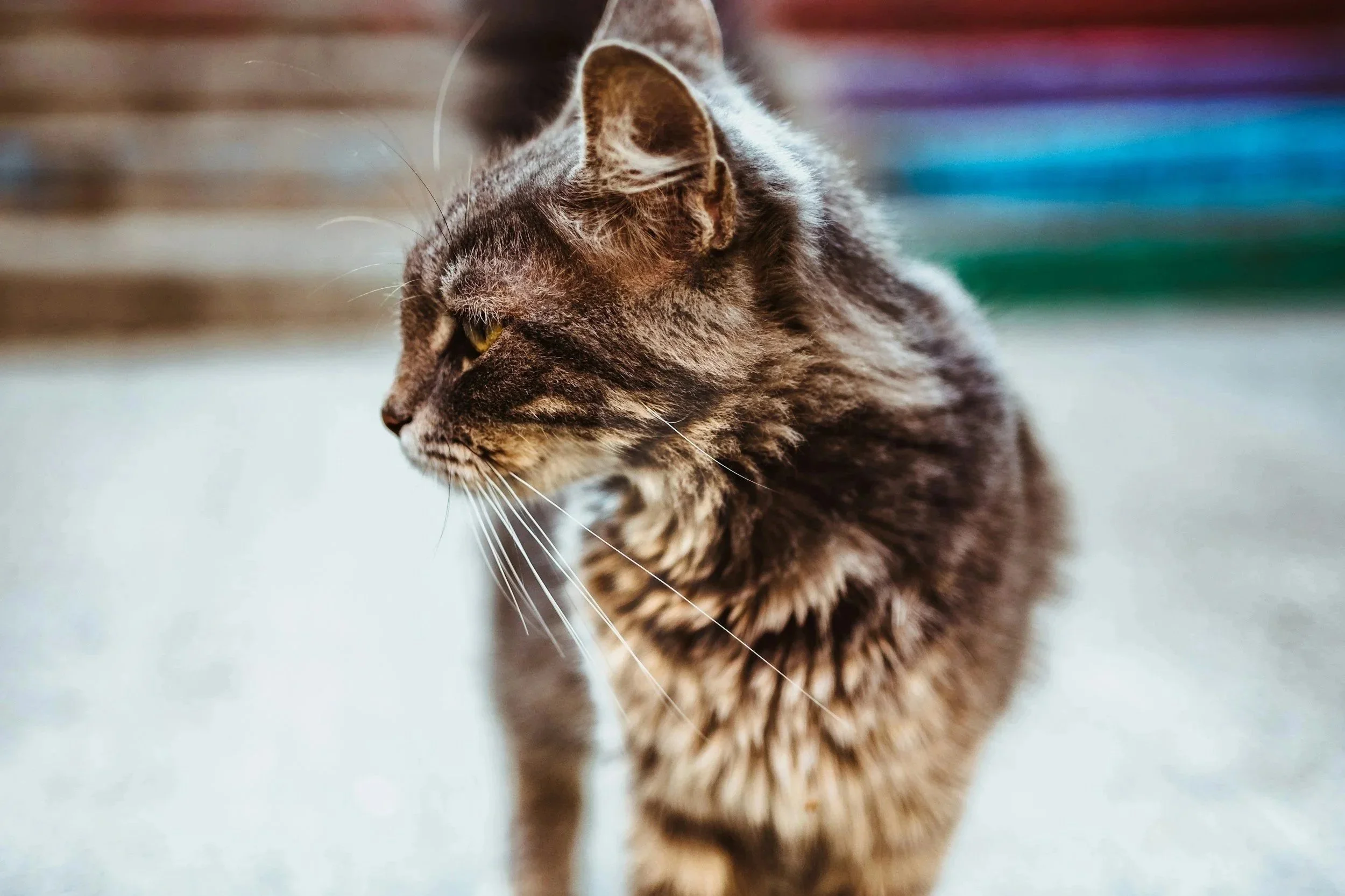
These changes are easy to dismiss as “just getting older”, but they can be signs that your cat is uncomfortable.
Signs of arthritis pain in cats
Cats with osteoarthritis may show signs such as:
reduced jumping height or fewer attempts to jump
hesitation before jumping up or down
stiffness, limping or moving less freely
sleeping more than usual
hiding more or being less social
reduced grooming, leading to matting, dandruff or a greasy coat
difficulty grooming the back, hips or hind legs
overgrooming or licking one particular area
reluctance to climb stairs
toileting outside the litter tray
irritability or reduced tolerance of handling
Toileting outside the litter tray is especially important to assess properly. Sometimes it happens because a painful cat finds it difficult to climb into a high-sided tray. Other times, it may be caused by urinary disease, constipation, kidney disease, stress or other medical problems.
This is why a veterinary check is so important.
What should you do if you think your cat has arthritis?
If you have noticed any of these changes, the first step is to book a veterinary appointment.
A full physical exam allows your vet to assess your cat’s joints, spine, muscles, coat condition and general health. We also look for other conditions that can cause similar signs, such as bladder disease, dental pain, kidney disease, thyroid disease, neurological problems or injuries.
Sometimes X-rays are helpful to assess joint changes or rule out other causes of pain. Blood and urine tests may also be recommended, particularly in older cats, to check kidney and liver function and help guide safe treatment choices.
This is not about doing every test for every cat. It is about understanding the whole picture so we can make a plan that suits your cat.
How is arthritis in cats treated?
Arthritis treatment in cats is usually multimodal. That means we use several small, practical strategies together rather than relying on one single treatment.
A good arthritis plan may include:
pain relief
environmental changes at home
weight management
nutritional support
regular monitoring and adjustment over time
We also understand that medicating cats can be difficult. A plan that looks perfect on paper is not useful if it damages the relationship between you and your cat or becomes impossible to maintain.
Our goal is to find an approach that helps your cat feel better and is realistic for your household.
Medication and pain relief for cats
Medication can make a significant difference for cats with arthritis pain.
Depending on your cat’s health and needs, your vet may discuss options such as anti-inflammatory medication, other pain relief, or monthly injectable pain relief designed for cats with osteoarthritis.
The best option depends on your cat’s age, kidney function, other health conditions, temperament and how easily they can be medicated.
Please do not give human pain medications to your cat. Many common human medications are dangerous for cats, even in very small amounts.
For older cats, blood and urine testing may be recommended before or during treatment so we can monitor organ function and choose the safest plan.
Home changes that help arthritic cats
Small changes at home can make a big difference to an arthritic cat’s comfort.
Think about the places your cat needs to access every day: food, water, litter tray, bedding, sunny spots, hiding places and favourite resting areas.
Helpful changes include:
using litter trays with low sides
placing food and water at ground level
adding steps, ramps or stable furniture to help cats reach favourite spots
providing warm, soft bedding
using pet-safe heat mats under blankets
keeping essentials on one level if stairs are difficult
using non-slip mats on slippery floors
choosing wide, stable bowls that are easy to access
These changes reduce the number of painful jumps, awkward climbs and uncomfortable movements your cat has to make each day.
Weight and nutrition
Keeping your cat at a healthy weight is one of the most important parts of arthritis management.
Extra weight places more strain on sore joints and can make it harder for cats to stay active. Weight loss can be challenging in cats, especially if they are already sore and moving less, so it is worth getting help early.
Your vet can help calculate your cat’s ideal weight and create a safe feeding plan. For some cats, a prescription weight loss diet is the most effective option because it allows controlled calorie reduction while still meeting nutritional needs.
Joint-support diets or supplements may also be considered. Some products contain ingredients such as omega-3 fatty acids, green-lipped mussel, glucosamine or chondroitin.
The evidence for joint supplements is mixed, so they should not be relied upon as the only treatment for a painful cat. However, they may be useful as part of a broader plan, especially when chosen carefully and used consistently.
When should you book an appointment?
Book a check-up if your cat is:
jumping less or hesitating before jumping
sleeping more or hiding more
grooming less or developing mats
toileting outside the litter tray
limping, stiff or moving awkwardly
less social or more irritable
reluctant to climb stairs
struggling to access food, water or favourite resting places
These changes are common in older cats, but they are not something we should simply accept as normal ageing. Our Healthy Ageing Program is designed to help identify pain, mobility changes and age-related health concerns early, so we can make a plan before small changes become bigger problems.
Pain in cats is treatable, and small changes can make a meaningful difference.
The quiet signs matter
Arthritis in cats is common, under-recognised and often very manageable.
With a careful assessment, practical home changes, appropriate pain relief and a plan that suits your cat’s personality, many cats become more comfortable, more mobile and more like themselves again.
If you have noticed your cat slowing down, jumping less, grooming less or seeming less comfortable, book an appointment with your local Evervet team. Our teams in Prahran, South Yarra, East Melbourne and Hawthorn can help assess your cat’s comfort and build a practical plan to support their mobility and quality of life.