
Your pet's teeth look clean. But are they actually healthy?
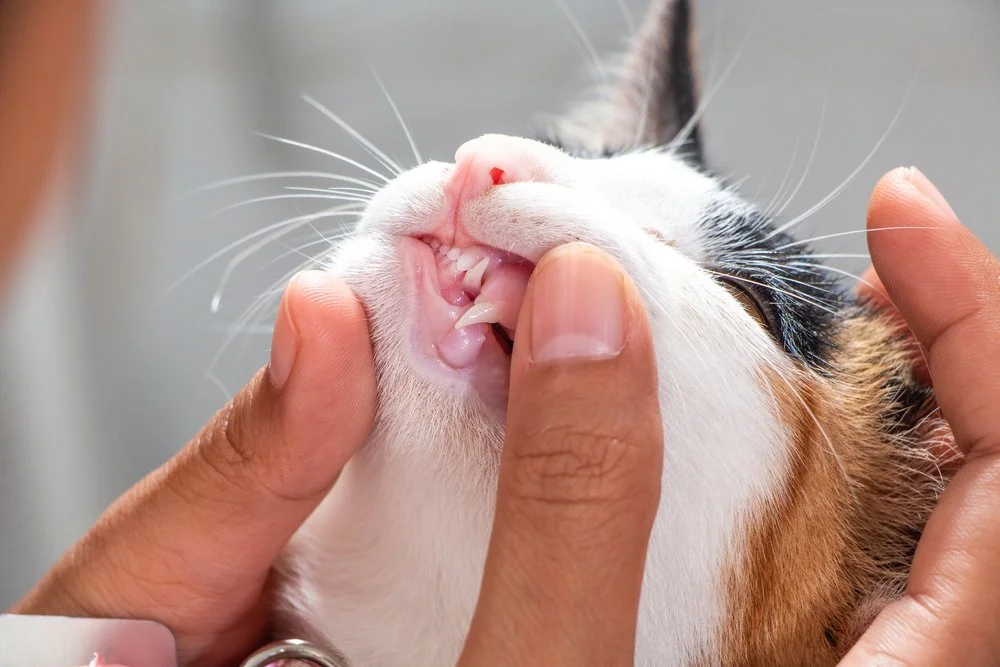
You lift your pet's lip.
The teeth look pretty good.
Maybe there's a little tartar around the back ones, but nothing alarming. Your dog is still demolishing dinner; your cat still appears in the kitchen with remarkable accuracy five minutes before “scheduled” meal times.
So their mouth must be healthy, right?
Possibly. But there's a problem with judging dental health only on what we can see.
Some of the most important dental diseases in dogs and cats occur where you can't see them at home.
That's why at Evervet we're more interested in a healthy, comfortable mouth than in teeth that simply look clean.
But surely tartar and calculus are the problem?
Plaque accumulates on teeth and can mineralise into the harder material we recognise as tartar or calculus. This more obvious change is what people often associate with dental disease in their pets.
But here's the important distinction:
Removing visible tartar isn't the same thing as treating dental disease.
Periodontal disease affects the tissues supporting the teeth, including below the gumline. So teeth can look considerably cleaner after visible tartar has been removed while important disease remains untreated underneath.
It's easy to miss that distinction because the cosmetic result can look impressive.
“But they're still eating…”
We hear this a lot.
And it's completely understandable. If your dog still demolishes dinner or your cat continues reminding you exactly when theirs is due, it's natural to assume their mouth can't be that sore.
Unfortunately, eating doesn't reliably tell us that a pet's mouth is comfortable.
Dogs and cats can compensate remarkably well for oral discomfort.
Some give us clues: chewing differently, dropping food, a preference for using one side of their mouth, avoiding harder foods, pawing at their face, drooling or becoming reluctant to have their mouth touched.
Others give us very little indication at all.
Cats can be particularly good at making significant dental disease.
So whilst appetite is useful information.
It just isn't a pain test.
What can we actually see during a consultation?
Quite a lot - but not everything.
While your pet is awake, we can look for things such as tartar, gingivitis, gum recession, fractured or discoloured teeth, obvious periodontal changes, oral masses and other abnormalities.
That examination is valuable. It helps us identify signs of dental disease and discuss whether your pet would benefit from a dental procedure.
But there are limits to what we can safely assess in an awake dog or cat.
We can't comprehensively probe around every tooth, assess structures hidden beneath the gumline or take the detailed dental X-rays needed to evaluate the tooth roots and surrounding bone.
That happens later, during the dental procedure, once your pet is under general anaesthesia.
So what happens during a dental procedure?
Once your pet is safely anaesthetised, we can perform a much more detailed examination of their mouth.
We examine and chart each tooth, probe around the teeth to assess the tissues beneath the gumline, and take dental X-rays to look at the roots, surrounding bone and other structures that simply aren't visible during a consultation.
And this is where dentistry can sometimes surprise owners.
Research has found that clinically important abnormalities are found on normal-looking teeth in up to 1-in-4 dogs, and nearly half of all cats, when dental X-rays are taken. In cats, X-rays are particularly important for the identification of conditions such as tooth resorption, which can involve significant disease below the gumline.
So it’s not uncommon for us to discover more dental disease than anticipated, once your pet is safely anaesthetised.
Nothing has suddenly gone wrong. It’s simply that this is the only way to conduct a full and thorough oral examination.
The American Animal Hospital Association (AAHA) specifically notes that a complete treatment plan may not be known until the anaesthetised oral examination and radiographs have been performed. This also explains why fee estimates for dental care sometimes come with a range - be wary of lowball dental quotes that aren’t upfront about the unpredictability of oral surgery or tooth extraction!
Why can’t dentistry be performed while they’re awake?
Because performing effective dentistry requires your pet to remain completely still whilst we examine and probe around potentially painful teeth, position equipment inside the mouth for dental X-rays and clean above and below the gumline.
General anaesthesia also allows us to protect your pet’s airway from the cleaning fluid and oral secretions in professional dental cleaning, and provide appropriate monitoring and pain management while treatment is performed.
It's understandable to feel apprehensive about an anaesthetic, particularly with an older pet.
Anaesthesia isn't risk-free, and we don't pretend that it is.
Before the procedure, we'll assess your pet as an individual and discuss any pre-anaesthetic testing or additional precautions we think are appropriate - risk is relative, as is chronic poor health; we need to consider the cost of both.
That's why we deem the only worthwhile veterinary dental procedure is one that’s performed under general anaesthesia - we weigh the benefit for each of our patients individually.
What about anaesthetic-free dental cleaning?
This is where we take a clear position at Evervet.
We don't believe making teeth look cleaner is a substitute for treating dental disease.
Removing visible tartar from the exposed surfaces of an awake pet's teeth can certainly make them look nicer.
But it doesn't allow us to comprehensively examine below the gumline, obtain the dental X-rays required to assess hidden structures, properly clean the subgingival area or treat disease discovered there.
The American Veterinary Dental College goes considerably further: it describes removal of visible calculus alone as having little effect on the pet's health and the result as purely cosmetic. It also raises concerns around stress, injury and the inability to comprehensively examine an awake animal's mouth.
So if you're considering an anaesthetic-free clean because it seems like the safer or simpler option, we'd encourage you to ask a different question:
Are we trying to make the teeth look better - or make the patient healthier?
They're not necessarily the same thing.
And if it's the anaesthetic itself that's worrying you, talk to us about that concern rather than choosing a costly procedure that offers little benefit.
What can I do at home?
Quite a lot.
After your pet has undergone a professional dental examination and treatment, the goal of home dental care is to reduce plaque accumulation between veterinary assessments and dental procedures.
Regular tooth brushing is our first choice where your pet will tolerate it.
Starting gradually and positively is particularly important with cats - and with dogs who aren't accustomed to having their mouths handled.
For pets where brushing isn't realistic, some dental diets, chews and other products have evidence supporting plaque or tartar control.
The important word there is some.
A product having “dental” written on the packet doesn't necessarily mean it has demonstrated a useful effect. Products accepted by the Veterinary Oral Health Council (VOHC) are a useful place to start because they have been assessed against defined standards for plaque or calculus control.
And we don't recommend very hard bones, antlers or similar products as a dental-health strategy. A clean-looking tooth isn't much consolation if that tooth is then fractured.
So when should I ask about my pet's teeth?
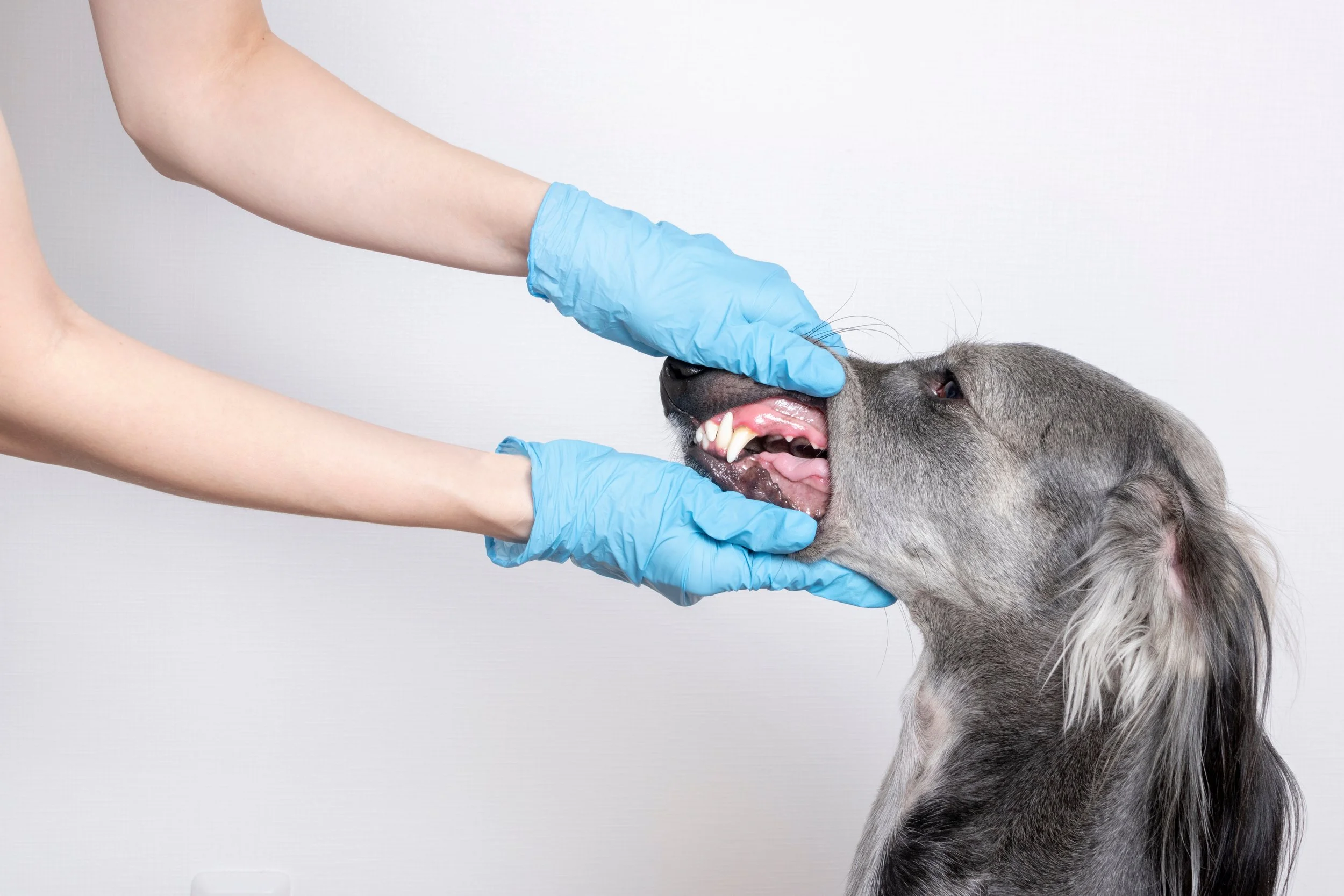
Tell us if you've noticed:
bad breath
tartar
red or bleeding gums
drooling
changes in chewing or eating
dropping food
pawing at the mouth
a broken or discoloured tooth
facial swelling
or anything else that doesn't look right.
But equally, don't be surprised when we bring up your pet's teeth during a routine examination even when you haven't noticed a problem.
And don't wait until your dog or cat stops eating before assuming their mouth might hurt - Our experienced veterinary nurses provide FREE dental health assessments even if your pet’s next vet check isn’t quite due yet.
The goal of veterinary dentistry isn't the whitest smile in the park.
It's a mouth that's healthy, functional and comfortable.
Evervet provides veterinary dental care for cats and dogs across Prahran, South Yarra, East Melbourne and Hawthorn.
Your pet. Your family. Always.